GOLDSMITHS AWARD
GOLDSMITHS AWARD
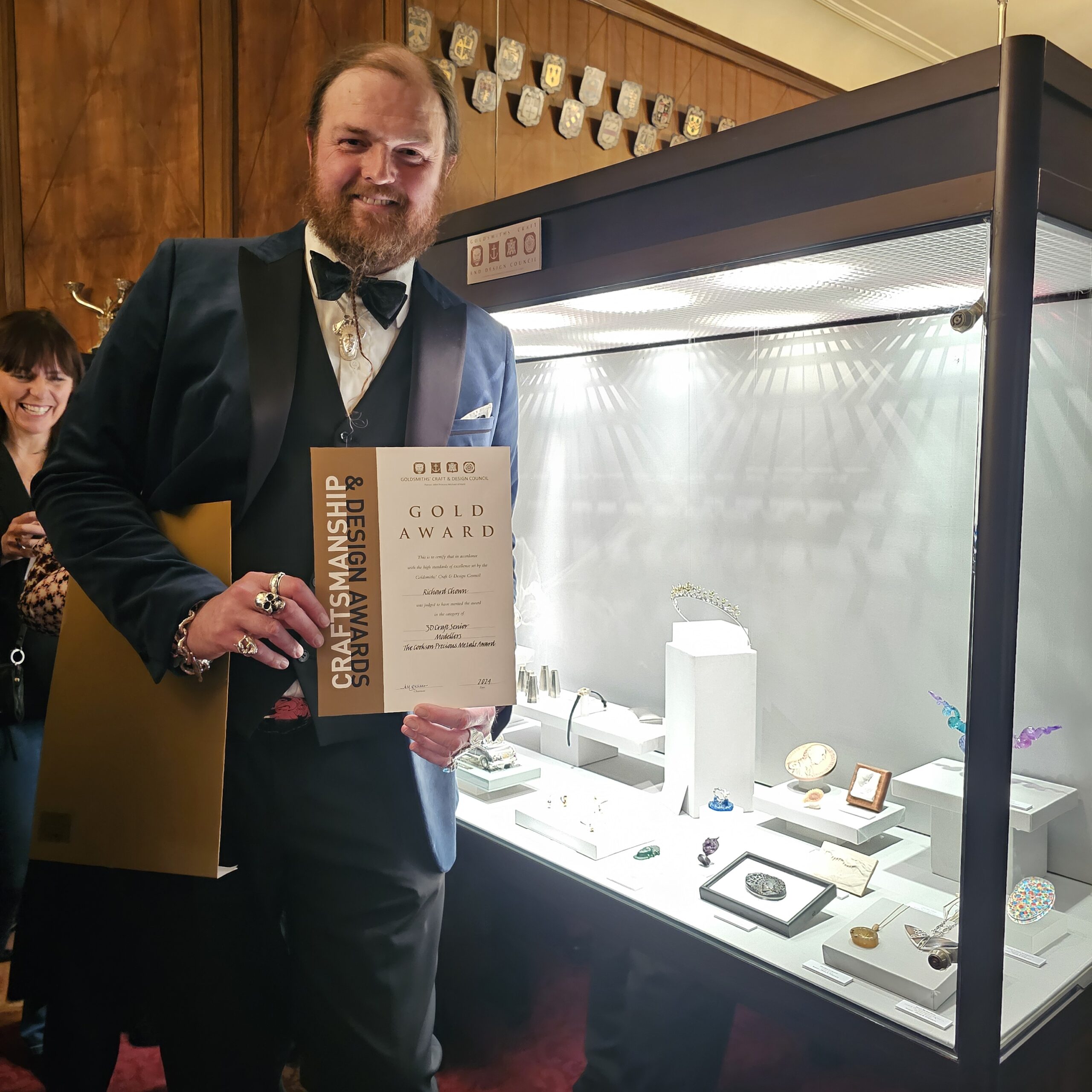
In 2024 at the Goldsmiths Craft and Design Council Awards..
I won the Gold Award with the Cookson Precious Metals Award in the Senior Modellers Category. (This is a sculpting award with nothing to do with strutting up and down catwalks).
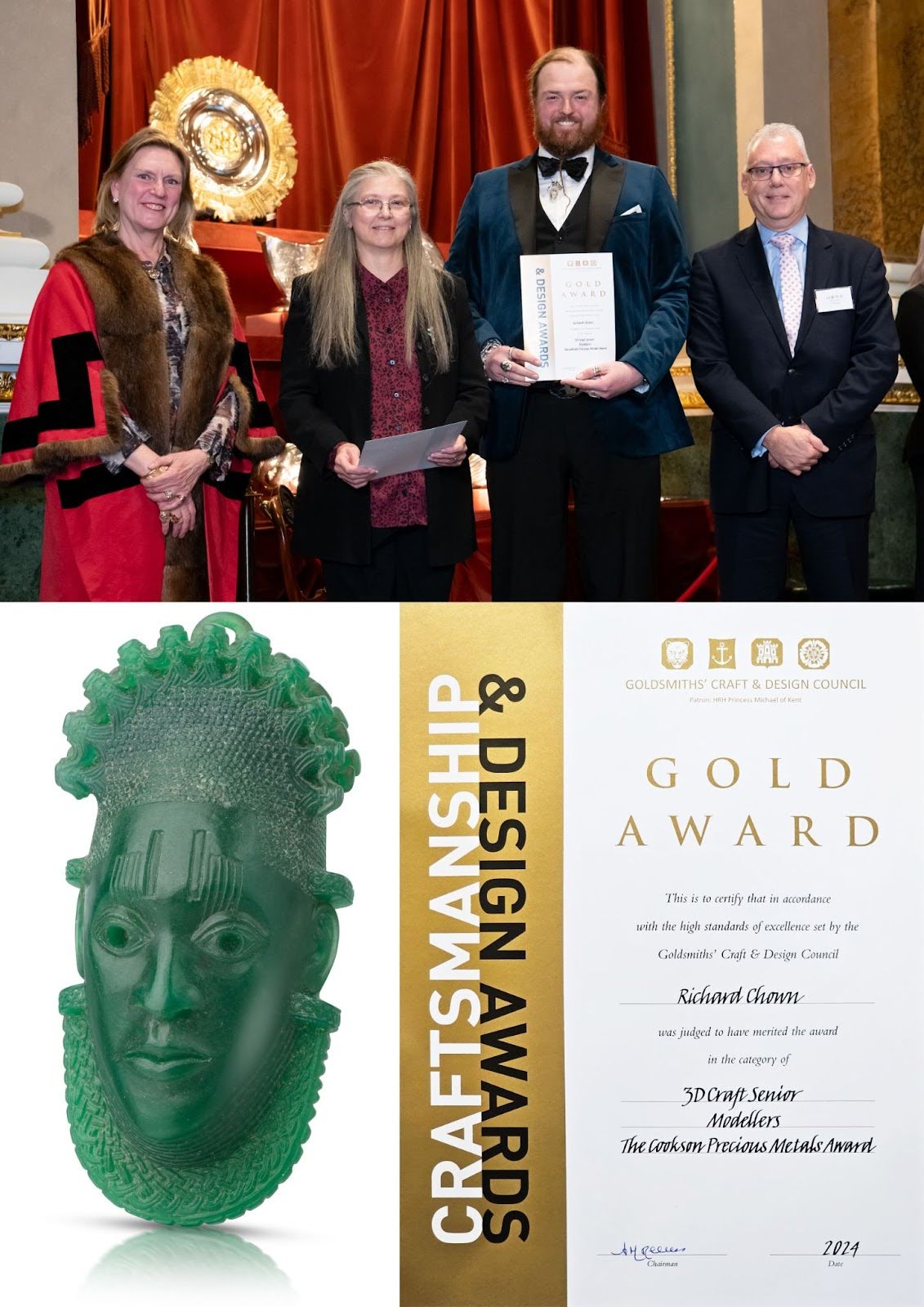
This is a replica of the 16th century ivory portrait of Queen Idia of Benin. It was worn by her son when he was king as a hip pendant. The British stole it in the 18th century along with lots of bronze work and destroyed lots more stuff. This is a terrible tragedy, and the thing that upsets me the most is losing all the other art work, making it harder to tell the story of the art history of Benin, and how they got to make such exquisite work. Some work from the early 14th century from Benin is more refined than anything I’ve seen from Europe at the time, so I’d love to see their journey.
I was commissioned to make this by a Nigerian customer. I didn’t know too much about the symbolism of the original, but I’d seen it in various African cultural things over the years, especially as I’d grown up around the large Nigerian community in Peckham. Upon realising how culturally significant the piece was and how white I am, I realised I had to make it as well as I could. I’m aware that white people have depicted Africans as insulting caricatures, but that I also had to avoid making the face look European, so I spent a while looking at the faces of West Africans to make sure I got the proportions of the nose and mouth as accurate as possible. People take a lot of pride in their appearance and I had to be specific and I wanted to respect this while avoiding stereotypes.
The details on the mask are fascinating as they tell quite a story about what the queen wore. Upon her head is a sort of crown depicting eleven Portuguese traders (each of whom have tiny faces with head bands and beards), as Benin had lucrative links with Portugal that they were very proud of. Her forehead shows small dots that I think are short locks of hair, and behind the crown I think are longer twisted locks matching the height of the crown. Under her neck is a woven piece. It’s a bit like celtic knot work, but some of the strands disappear as it tapers, which doesn’t happen in celtic knots, and this took me a while to realise.
I came to the awards a bit cold. I’d been a bit of a hermit for over ten years as I’d wanted to figure things out for myself and develop my own style, so I hadn’t heard much about them, and this was the first time I entered. It was therefore very strange winning one of the top awards. Part of me felt a bit like Groucho Marx when he said “I refuse to join any club that would have me as a member” and thought the whole thing must be a bit of a joke if they’d given one to me! It’s taken me over a year to come to terms with how significant this was, and how tricky it is to get recognised. Especially as I’ve always felt I’m much better at understanding what an individual wants than an institution. I’ve done very well helping people realise their ideas and made customers very happy, but I’ve got a bit of a chip on my shoulder that I only got a 2:2 from my art college as I just couldn’t understand what they wanted. It’s been wonderful to get this recognition to gain some confidence. I don’t know if I’m alone, but imposter syndrome has always been a demon I’ve struggled with.
The silver version of this wax sculpture is available in my shop in both pendant and ring form.
In 2024 at the Goldsmiths Craft and Design Council Awards..
I won the Gold Award with the Cookson Precious Metals Award in the Senior Modellers Category. (This is a sculpting award with nothing to do with strutting up and down catwalks).
This is a replica of the 16th century ivory portrait of Queen Idia of Benin. It was worn by her son when he was king as a hip pendant. The British stole it in the 18th century along with lots of bronze work and destroyed lots more stuff. This is a terrible tragedy, and the thing that upsets me the most is losing all the other art work, making it harder to tell the story of the art history of Benin, and how they got to make such exquisite work. Some work from the early 14th century from Benin is more refined than anything I’ve seen from Europe at the time, so I’d love to see their journey.
I was commissioned to make this by a Nigerian customer. I didn’t know too much about the symbolism of the original, but I’d seen it in various African cultural things over the years, especially as I’d grown up around the large Nigerian community in Peckham. Upon realising how culturally significant the piece was and how white I am, I realised I had to make it as well as I could. I’m aware that white people have depicted Africans as insulting caricatures, but that I also had to avoid making the face look European, so I spent a while looking at the faces of West Africans to make sure I got the proportions of the nose and mouth as accurate as possible. People take a lot of pride in their appearance and I had to be specific and I wanted to respect this while avoiding stereotypes.
The details on the mask are fascinating as they tell quite a story about what the queen wore. Upon her head is a sort of crown depicting eleven Portuguese traders (each of whom have tiny faces with head bands and beards), as Benin had lucrative links with Portugal that they were very proud of. Her forehead shows small dots that I think are short locks of hair, and behind the crown I think are longer twisted locks matching the height of the crown. Under her neck is a woven piece. It’s a bit like celtic knot work, but some of the strands disappear as it tapers, which doesn’t happen in celtic knots, and this took me a while to realise.
I came to the awards a bit cold. I’d been a bit of a hermit for over ten years as I’d wanted to figure things out for myself and develop my own style, so I hadn’t heard much about them, and this was the first time I entered. It was therefore very strange winning one of the top awards. Part of me felt a bit like Groucho Marx when he said “I refuse to join any club that would have me as a member” and thought the whole thing must be a bit of a joke if they’d given one to me! It’s taken me over a year to come to terms with how significant this was, and how tricky it is to get recognised. Especially as I’ve always felt I’m much better at understanding what an individual wants than an institution. I’ve done very well helping people realise their ideas and made customers very happy, but I’ve got a bit of a chip on my shoulder that I only got a 2:2 from my art college as I just couldn’t understand what they wanted. It’s been wonderful to get this recognition to gain some confidence. I don’t know if I’m alone, but imposter syndrome has always been a demon I’ve struggled with.
The silver version of this wax sculpture is available in my shop in both pendant and ring form.